
Fleet management and telemetry for 5,500 forklifts
Adoption of a technology platform for telemetry and remote management of a fleet of 5,500+ forklifts and optimization of business processes
Dealer of material handling equipment
CLS - CGT Logistica Sistemi, which forms part of the Tesya Group, has for 70 years been focused on the sale, hire and support of forklift trucks, vehicles and equipment for every sector of goods handling and logistics. It has headquarters in Carugate (Milan), a workforce of more than 300 people, 11 branches, 9 operating centres, 180 mobile workshops, more than 5,500 vehicles on hire, and 150 models of forklift trucks with a load capacity of up to 56 tonnes.
Remote control of logistics machinery operational flows via telemetry
The Customer required an advanced telemetry system that enabled state-of-the-art and universal integration of the entire fleet of vehicles (currently and in the future) that could be controlled remotely, which was able to adapt to all the needs of modern warehouses from an Industry 4.0 point of view in order to control and act on the operating flows of the logistics vehicles.
The system needed to be versatile and modular, able to adapt to new requirements with the addition of functionalities, providing a future-proof product that could keep in step with the emerging needs dictated by the digital transformation of the companies. It also had to be able to interface with existing HW/SW systems, both on the vehicle and in back-end mode.
The aim the customer wished to achieve was to offer value-added services to its clients to improve the industrial processes, streamline the procedures, and optimize its business.
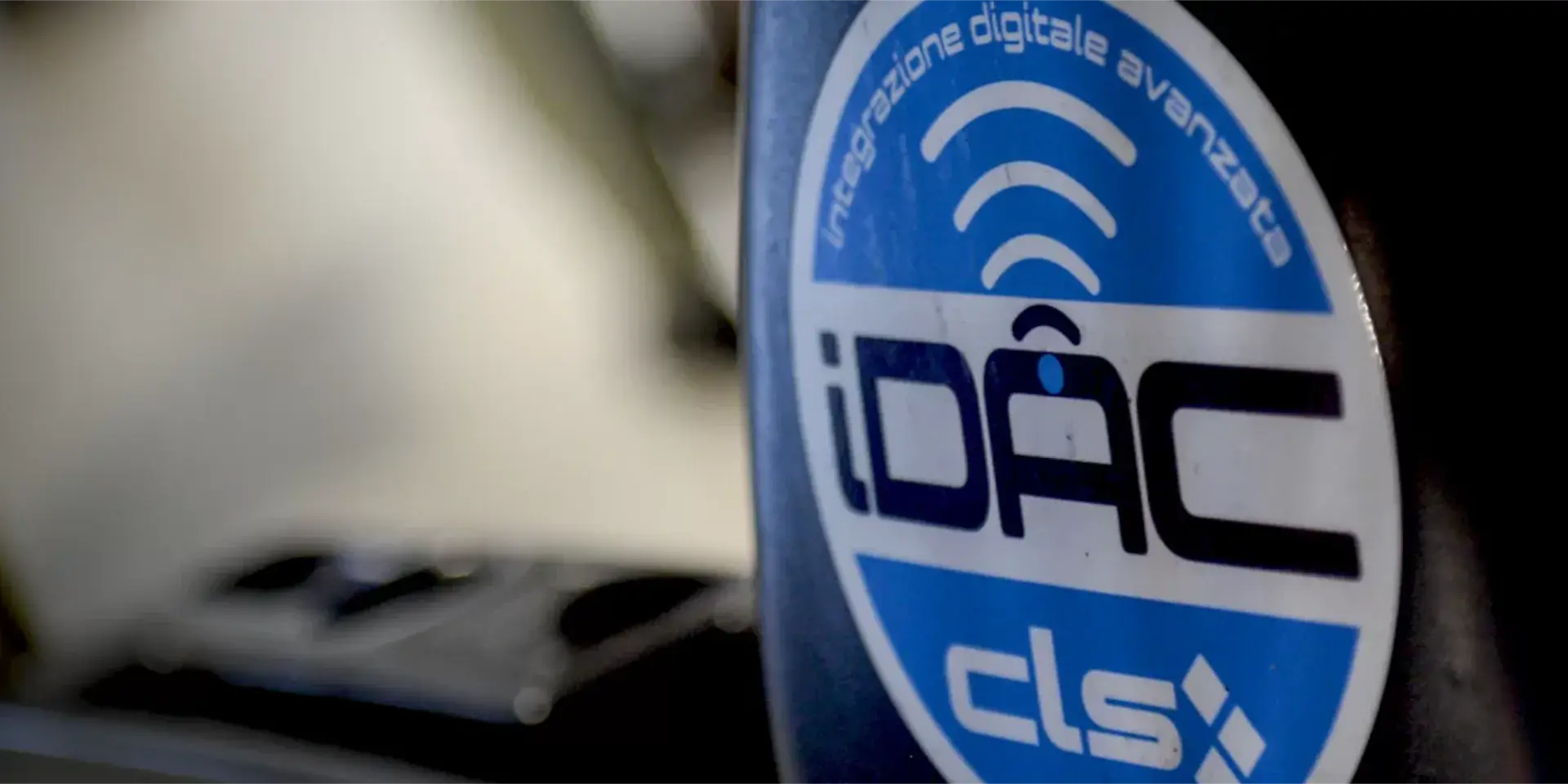
Advanced telemetry and SAP management: the iDAC hardware/software solution
Ubiquicom developed both the Hardware and Software components of the new advanced telemetry system, iDAC.
The system consists of an online platform accessible with a normal Internet connection and integrated with the customer's SAP management system, a hardware component—the telemetry box - with a built-in CPU, installed on the CLS which communicates with the cloud-based web platform through an IoT data card and through the WiFi modem, and an operator interface 4.0 which incorporates a badge reader so that the machine can only be started by authorised personnel.
Ubiquicom also developed a series of made-to-measure functions for CLS which have a dual purpose.
For the CLS dealer, these functions allow a reduction of the OPEX, thanks to the possibility of carrying out remote diagnostics, predictive and preventive maintenance, and monitoring of improper uses (battery consumption, collisions, …). From the dashboard it is possible to access strategic insights for operations and marketing, access use trends, etc. Moreover, it is possible to also manage ad-hoc pricing models (pay-per-use / location-based).
For the final customer, iDAC enables services to be provided for preventing dangerous or prohibited uses, enabling use of the vehicle on the basis of the operator's qualifications, monitoring times of use and signalling inactivity, and controlling checklists of operators.
Ubiquicom has set up a total of more than 2,500 installations and supported CLS for all aspects regarding consultancy, installation, and training of personnel.
Logistics fleet optimisation: advanced telematics and collision avoidance.
Each CLS uses an advanced telematics technology platform that integrates the entire fleet of vehicles. The new system enables traditional machinery to be integrated digitally in the production processes: it sends and receives data and operating instructions, which can be consulted and managed in real time through the portal and web interfaces.
By using iDAC, CLS can remotely measure the parameters of use of the machines, receive signals of faulty machines, identify the position of the machine indoors and/or outdoors, control accesses (and thereby only allow use of the machine by qualified and authorised personnel), prevent vehicle/man and vehicle/vehicle accidents (anti-collision) thanks to an automatic zonal slowing down system.
Frequently Asked Questions about Forklift Fleet Management and Telematics
A telematics platform can collect and centralise data from connected forklifts, even when the fleet is distributed across multiple sites and customers. This gives dealers and fleet managers a comprehensive view of the fleet and the activity of individual vehicles.
Telematics collects data on forklift operating hours and activity, making it possible to analyse how vehicles are actually being used. This information can help identify underutilised forklifts, optimise fleet management and support data-driven decisions.
Yes. Data collected from devices installed on the vehicles can be accessed remotely through the fleet management platform. Dealers can therefore monitor their customers' fleets without having to manually check every individual forklift.
Yes. Usage data and vehicle events can provide useful information for planning maintenance activities and supporting service operations. When combined with remote diagnostics, telematics can also give dealers more information to support customers and target service interventions more effectively.
A fleet management platform can organise data by customer, site and individual vehicle. This allows dealers to manage distributed fleets centrally while maintaining detailed information for each customer.
Yes. Telematics systems can integrate access-control features that verify whether an operator is authorised before the vehicle is used. For dealers, this can also become an additional service to help customers manage their fleets in a more controlled way.
Telematics can collect data on vehicle events and usage patterns, providing information that can help identify situations requiring attention. It can also be integrated with dedicated safety technologies, such as collision avoidance systems, to support a more comprehensive approach to operational safety.
Yes. Telematics can be integrated into a broader ecosystem that includes fleet management, localisation, safety and remote diagnostics, as well as the management systems already used by the company. This makes it possible to connect vehicle data with fleet management and service processes.
For dealers, telematics provides greater visibility into the fleets they manage and can support service, maintenance and monitoring activities. For customers, it provides more information about forklift usage and fleet management through data-driven services.
Yes. Fleet data can provide the foundation for services such as fleet monitoring, usage analysis, maintenance management and remote diagnostics. For dealers, telematics can therefore help expand their service offering and create additional value throughout the forklift lifecycle.