
Transforming Yard Management with RTLS
Yard management and flow monitoring of vehicles in indoor/outdoor areas of production and logistic sites
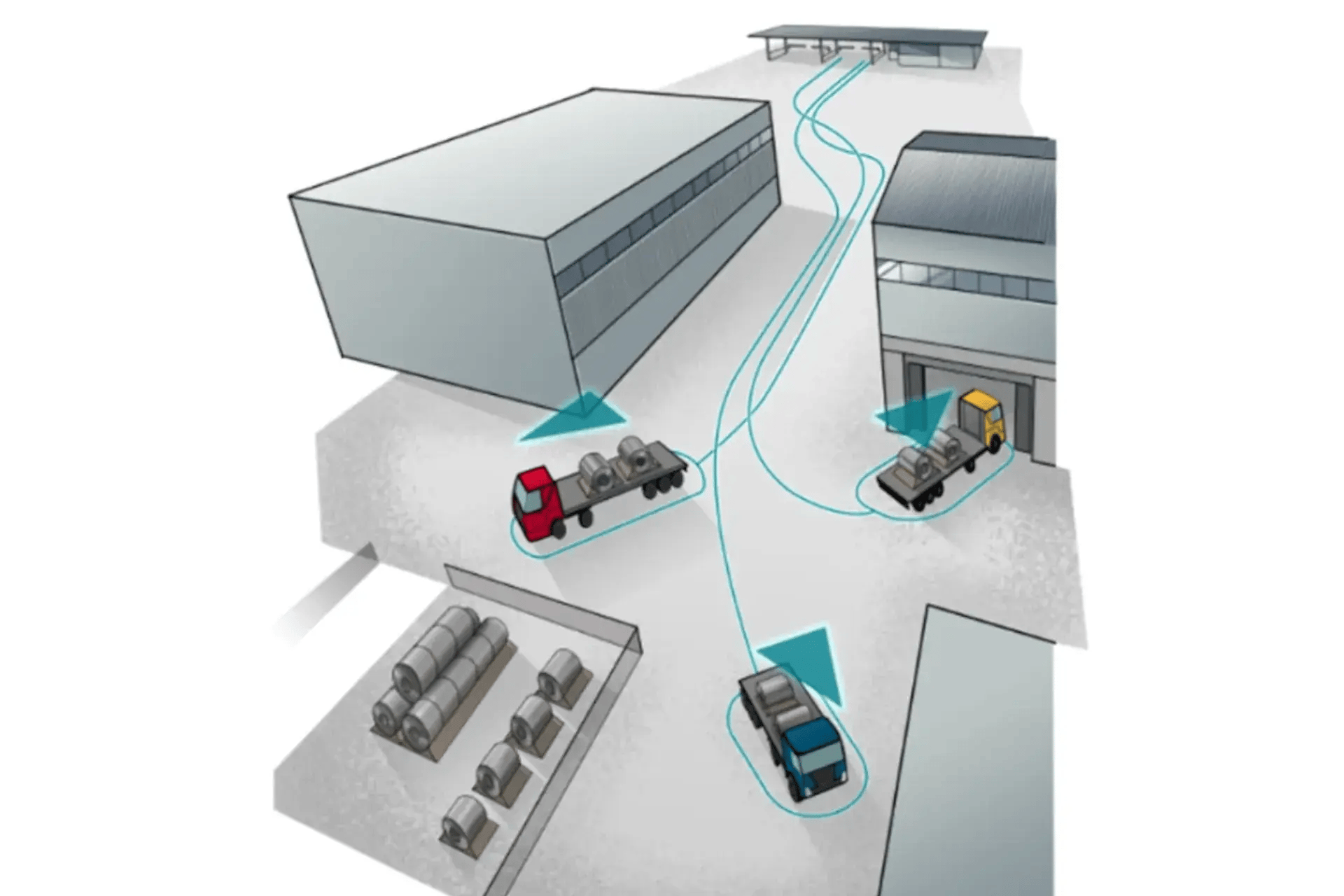
Traffic flow, procedures, bays
- Control of incoming external and internal vehicles in logistics and manufacturing facilities.
- Digitizing the acceptance procedures for incoming materials.
- Bay Management: communicating target bays or unloading stations to drivers even after they have entered the site.
Direct location of vehicles
Location of operating vehicles with vehicle and/or personal tags.
Possibility of integration with HW systems to provide visual support to the operator (e.g., light or visual signaling).
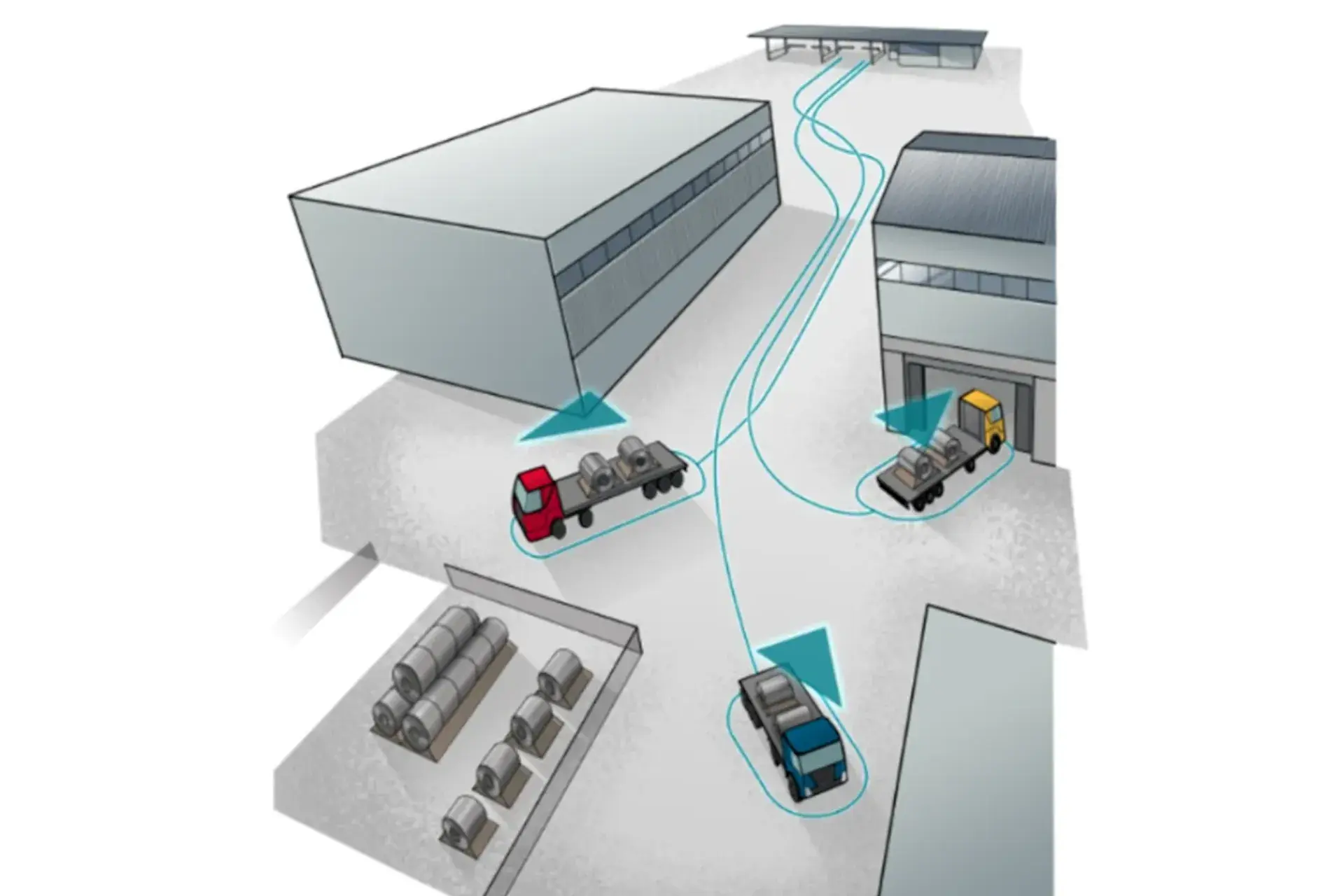
Optimisation of traffic and operations in bays, reduction of time and errors
 Reduce goods unloading errors
 Avoid heavy-traffic situations and traffic jams within the operational areas
 Dashboard for locating vehicles in real-time
 Optimize usage of the bays
 Reduce unloading times and facilitate communication with the drivers
How yard management can support a production site
A mix of technologies is used to monitor the flows of both internal and supplier vehicles and provide a real-time situation of each semi-finished vehicle in production.

Questions and insights about RTLS yard management
RTLS-based yard management is a solution that provides real-time location visibility over trucks, trailers, containers, and yard equipment across the external loading and unloading areas of a warehouse, distribution center, or manufacturing plant.
Ubiquicom's system uses GPS and UWB tracking to monitor every vehicle and trailer in the yard continuously, displaying their positions on a live digital map. Yard managers can instantly see which trailers are at which docks, how long each vehicle has been waiting, where empty trailers are parked, and the movement history of any asset in the yard. This replaces the traditional approach of manual yard checks and paper-based records, which are time-consuming, error-prone, and always out of date.
RTLS addresses the most persistent yard management pain points.
-
Trailer search time is eliminated because the system shows the exact position of every trailer on the map rather than requiring a yard driver to physically search rows of parked trailers.
-
Dock utilization improves because managers can see which docks are available and immediately direct incoming trucks to the optimal position.
-
Detention charges are reduced because accurate dwell time records prove when a carrier's truck arrived and when it was released, supporting dispute resolution.
-
Appointment scheduling becomes more reliable because real-time visibility shows when a dock will actually be clear, rather than relying on estimates.
-
Unauthorized vehicle movements are detected through geofence alerts, improving yard security.
RTLS improves yard efficiency by providing:
- real-time visibility on truck arrivals,
- dock availability,
- yard movements.
This allows operators to assign trucks to docks faster and reduce waiting times caused by manual coordination or lack of visibility.
At the same time, the system automatically records arrival, docking, and departure times, providing accurate and objective data to manage detention costs and avoid disputes with carriers.
Yes, Ubiquicom's RTLS yard management platform integrates with transportation management systems (TMS), dock scheduling software, and yard management systems (YMS) through standard APIs.
When a carrier checks in at the gate, the RTLS automatically records the arrival and matches it to the scheduled appointment in the TMS. As a truck is directed to a dock, the dock scheduling system is automatically updated to reflect the assignment. Real-time location data enables the scheduling system to predict dock availability more accurately based on observed unloading progress rather than assumed completion times.
Integration with the WMS ensures that dock allocation aligns with inbound and outbound priorities, preventing dock conflicts and reducing total vehicle time in the yard.
Geofencing is a core functional element of RTLS yard management. Virtual zones are defined on the digital yard map representing dock positions, designated parking areas for specific trailer types, restricted zones, and the yard perimeter. When a truck or trailer enters or exits any of these zones, the system generates an automatic event log entry and can trigger alerts to relevant personnel.
Gate geofences automate vehicle check-in and check-out by recording the exact time of each entry and exit without manual intervention.
Dock geofences confirm when a truck has backed into position and when it has departed.
Restricted zone geofences alert security teams to unauthorized vehicle movements.
Together, these geofencing rules provide both operational intelligence and security monitoring across the yard.