
WMS optimization based on location
How to optimize WMS and supply chain with an RTLS system, improving times and ROI of warehouse operations
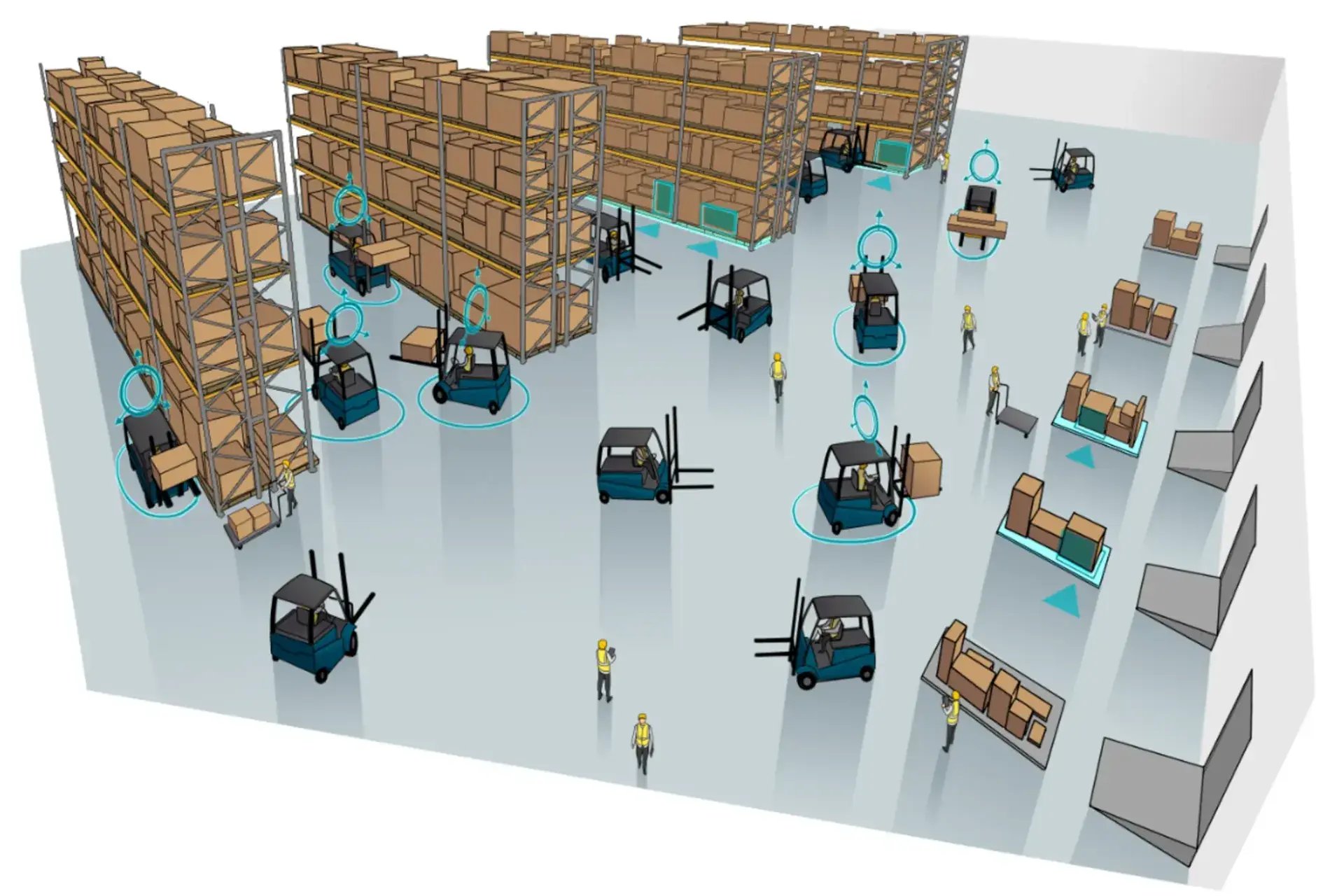
Bridging the gap between static planning and actual warehouse operations
- Current management systems are not based on real-time information about resource location (vehicles, products, and operators)
- The warehouse operations plan, which is typically produced the day before, does not include real-time data
- Reality differs from the plan due to bottlenecks, delays, priority changes, unforeseen events, and so on.
Direct location of vehicles with BLE, Lidar, or UWB technologies
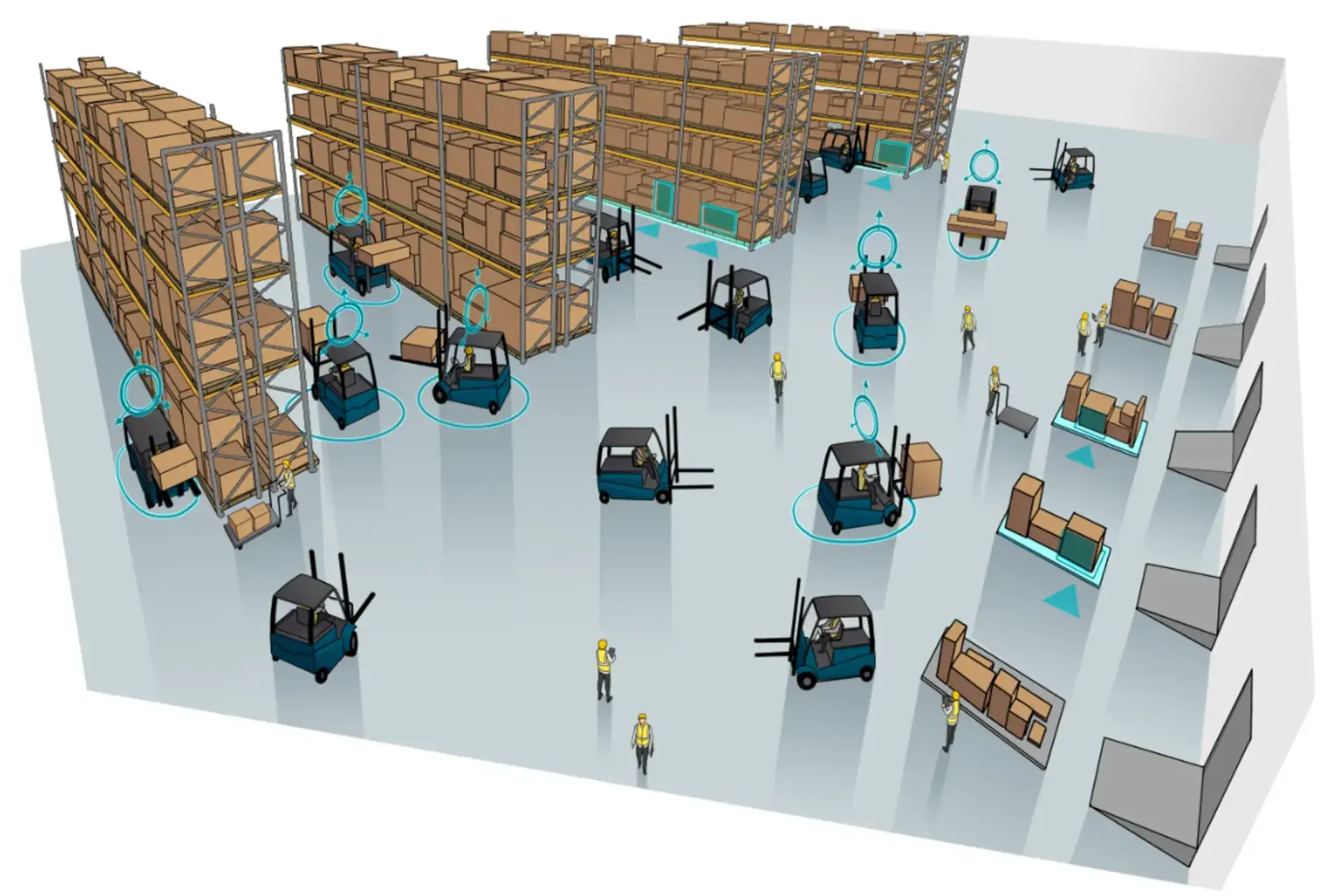
Benefits of RTLS for optimising WMS
 Average task time reduction
 Digital twin: the capacity to predict ROI by replicating certain warehouse processes using algorithms
 Success-based policies geared towards sharing benefits with the customer
 No change in the way vehicles are operated
 Sustainability and energy saving (reduction of the distance traveled)
Questions and insights about WMS optimization with RTLS
RTLS optimizes a Warehouse Management System (WMS) by providing real-time, automatic location data that enhances the accuracy, responsiveness, and intelligence of WMS processes.
A standard WMS relies on manual barcode scans to update inventory positions, which introduces lag between physical reality and system records. Ubiquicom's RTLS layer feeds continuous location events into the WMS automatically, so inventory records are updated the moment goods move rather than only when a worker scans them.
This real-time synchronization improves inventory accuracy, reduces discrepancies, enables smarter task assignment, and allows the WMS to generate faster and more accurate responses to picking requests, replenishment needs, and dock scheduling.
In a WMS-driven picking operation, RTLS confirms picks automatically based on the picker's location and the inventory item's movement, rather than requiring a barcode scan of each picked item.
The system knows which picker is assigned to which pick task via the WMS, and when that picker's tag enters the location assigned for the pick and the inventory item tag moves at the same time, the system records the pick as confirmed.
This scan-free pick confirmation speeds up the picking process by eliminating the time taken to point, aim, and scan a barcode on each item, particularly in environments with difficult-to-scan packaging or high-bay rack locations. It also reduces errors caused by scanning the wrong item in adjacent locations.
Traditional WMS implementations rely on periodic barcode scanning to know where inventory is, which creates several structural limitations.
First, inventory location data is only as current as the last scan, meaning goods moved without scanning are invisible to the system, causing picking errors and false stockouts. Second, WMS task optimization is based on static slot assignments rather than dynamic knowledge of where items actually are, leading to suboptimal pick routes. Third, without continuous vehicle tracking, WMS cannot assign tasks to the nearest available picker or forklift. Fourth, dock and yard activities are largely invisible to the WMS.
RTLS resolves each of these limitations by providing the continuous, automatic location data the WMS needs to function as a truly real-time system.
Yes, the location and movement data captured by RTLS provides a rich data set for WMS slotting optimization. By analyzing actual picker travel paths and the frequency with which different SKUs are accessed, slotting analysts can identify which products should be moved to positions that minimize travel distance for the most common picking combinations. RTLS data also reveals which slots are accessed most frequently versus rarely, providing an objective basis for golden zone assignments.
Over time, as demand patterns shift, the RTLS data shows when slotting decisions have become suboptimal, prompting a slotting review. This data-driven approach to slotting consistently delivers greater travel distance reductions than static slotting models based on system transaction counts alone.
Ubiquicom's RTLS platform integrates with WMS solutions from all major vendors through standard REST APIs and message broker integrations. The integration architecture is designed to be WMS-agnostic, meaning it does not require a specific WMS brand or version. Data exchange formats are configured during implementation to match the data schemas used by the target WMS. Common integration points include inventory location update transactions, task completion confirmations, vehicle and worker assignment APIs, and dock status feeds.
For warehouses running custom or legacy WMS platforms, integration is achieved through file-based data exchange or direct database connections where API connectivity is not available.
Warehouses integrating RTLS with their WMS typically measure improvements across multiple performance dimensions. Inventory accuracy improves from typical WMS-only levels of 95–97% to 99%+ due to automatic real-time location updates. Picking productivity increases by 15–30% through scan-free pick confirmation and optimized routing based on real-time picker and inventory positions.
WMS task response time improves because the system can assign tasks to the nearest available worker rather than the next worker in a queue. Receiving processing time decreases because arriving goods are automatically located and matched to open purchase orders as soon as they are unloaded.