
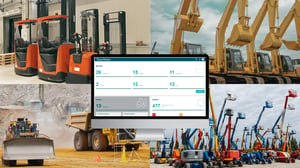
Discover how warehouse and logistics operators can improve forklift safety, optimize fleet utilization, reduce downtime, and gain complete operational visibility through real-time fleet telematics.
Introduction
Warehouse and logistics managers need more than vehicle tracking to manage modern fleets effectively.
They need real-time visibility into forklift utilization, operator activity, equipment availability, safety events, and maintenance status. Fleet telematics provides this visibility, helping organizations improve safety, productivity, and operational efficiency across warehouses, distribution centers, and manufacturing facilities.
By combining vehicle tracking, operator management, utilization analytics, and operational intelligence within a single platform, telematics technology enables organizations to make faster decisions, improve fleet safety, increase fleet productivity, and optimize the use of industrial vehicles.
TRACKVISION, Ubiquicom'sfleet management telematics platform, transforms operational data into actionable insights, helping companies achieve safer, more productive, and more efficient logistics operations.
Quick Answer: How Can Fleet Telematics Improve Warehouse Safety and Productivity?
Fleet telematics improves warehouse operations by providing real-time visibility into vehicle usage, operator activity, equipment location, safety events, and maintenance status. For warehouse and logistics managers, telematics platforms such as TRACKVISION help increase fleet productivity, improve forklift safety, optimize fleet utilization, reduce downtime, and support data-driven decision-making across material handling operations.
TRACKVISION combines vehicle tracking, fleet management, access control, utilization analytics, safety monitoring, and predictive maintenance capabilities within a single platform, enabling organizations to improve operational performance while reducing risk and inefficiencies.
What Are the Main Benefits of Fleet Telematics?
The main benefits of fleet telematics for warehouse and logistics operations include:
- Improved fleet safety through operator control, impact monitoring, and proactive risk management.
- Increased fleet productivity through real-time visibility and utilization analytics.
- Better vehicle utilization by identifying underused and overused assets.
- Reduced downtime through predictive maintenance and diagnostics.
- Improved operator accountability through access control and activity tracking.
- Greater operational visibility across warehouses and distribution centers.
- Data-driven decision-making based on real fleet performance.
- Better asset allocation and fleet sizing.
- Reduced operational costs and unnecessary equipment investments.
For organizations operating forklifts, reach trucks, tow tractors, and material handling equipment, fleet telematics provides the information needed to optimize both safety and operational efficiency.
What Is Fleet Telematics?
Fleet telematics is a technology that collects, transmits, and analyzes data from vehicles and industrial equipment to provide real-time visibility into fleet operations, safety, utilization, and maintenance performance.
In warehouse and intralogistics environments, fleet telematics enables organizations to:
- Monitor vehicle locations and availability in real time.
- Track vehicle usage and operating hours.
- Manage operator access and permissions.
- Detect impacts and operational anomalies.
- Improve maintenance planning.
- Monitor fleet utilization.
- Generate reports that support data-driven operational decisions.
Instead of relying on assumptions, fleet managers can leverage real operational data to improve both fleet safety and fleet productivity.
Why Is Fleet Telematics Essential for Warehouse Operations?
One of the biggest challenges facing warehouse and logistics operations is the lack of visibility into fleet utilization.
Many organizations struggle to answer critical operational questions:
- Which forklifts are being used most frequently?
- Which vehicles spend significant time idle?
- Are operators using the correct equipment?
- Where do most impacts or incidents occur?
- Is the fleet correctly sized for operational demand?
- Which assets require maintenance attention?
- Are there opportunities to improve productivity?
Without accurate data, it becomes difficult to optimize resources, justify investments, and improve operational performance.
Fleet telematics provides the visibility needed to transform warehouse operations from reactive management to proactive, data-driven decision-making.
Fleet Telematics vs Traditional Fleet Management
Traditional fleet management often relies on manual inspections, spreadsheets, and limited operational visibility.
By contrast, fleet telematics delivers real-time data and actionable insights.
Traditional Fleet Management
- Manual reporting
- Reactive maintenance
- Limited visibility into equipment usage
- Delayed identification of issues
- Limited operator accountability
- Difficult fleet optimization
Fleet Telematics
- Real-time operational data
- Predictive maintenance capabilities
- Complete fleet visibility
- Instant alerts and notifications
- Full operator traceability
- Data-driven fleet optimization
For warehouse operations, the difference can directly impact safety, productivity, and overall operating costs.
How Does Fleet Telematics Improve Fleet Safety?
Safety is one of the most important priorities in warehouse environments, where vehicles and pedestrians frequently share the same workspace.
Operator Access Control
Unauthorized vehicle usage can significantly increase operational risks.
TRACKVISION enables organizations to manage operator access through badge-based authentication and user permissions. Fleet managers can identify who used a vehicle, when it was used, and for how long.
Benefits include:
- Improved operator accountability
- Better compliance with safety procedures
- Reduced unauthorized vehicle usage
- Enhanced fleet traceability
Digital Pre-Operational Safety Checklists
Vehicle condition plays a critical role in workplace safety.
TRACKVISION enables configurable digital inspection checklists that operators must complete before using equipment. These inspections can include:
- Brake checks
- Steering inspections
- Fork condition verification
- Battery health checks
- Safety equipment validation
If a critical issue is identified, vehicle operation can be restricted until corrective actions are completed.
Impact Detection and Event Monitoring
Industrial vehicles operate in dynamic and often congested environments.
Using onboard sensors and accelerometers, TRACKVISION records impact events and generates alerts, allowing managers to:
- Investigate incidents
- Identify recurring risks
- Analyze safety trends
- Implement corrective actions
This visibility helps reduce equipment damage while improving workplace safety.
Integrated Safety Ecosystem
Unlike traditional vehicle tracking systems, TRACKVISION is part of Ubiquicom's broader connected ecosystem.
The platform integrates with:
- Anti-collision systems
- Proximity warning technologies
- Real-Time Location Systems (RTLS)
- Location-based safety applications
This integrated approach allows organizations to move beyond monitoring and actively improve safety performance.
How Does Fleet Telematics Increase Fleet Productivity?
Fleet productivity improves when organizations have complete visibility into asset utilization and operational performance.
Measure Vehicle Utilization
Many warehouses discover that some vehicles are highly utilized while others spend significant time idle.
TRACKVISION provides detailed utilization data, including:
- Operating hours
- Activity status
- Usage trends
- Fleet utilization reports
This enables managers to optimize fleet deployment and make informed purchasing decisions.
Improve Asset Availability
Searching for equipment wastes valuable time.
TRACKVISION enables real-time vehicle tracking and visibility, allowing supervisors to quickly identify:
- Active vehicles
- Available vehicles
- Idle equipment
- Assets requiring maintenance
The result is improved workflow efficiency and resource allocation.
Reduce Fleet Idle Time
Idle assets represent hidden costs.
Using utilization analytics, organizations can:
- Identify underused vehicles
- Optimize fleet sizing
- Improve asset allocation
- Increase return on investment
This reduces unnecessary fleet expansion while maximizing the value of existing assets.
How Does Fleet Telematics Support Data-Driven Warehouse Operations?
One of the greatest advantages of fleet telematics is transforming operational activities into actionable business intelligence.
TRACKVISION generates detailed insights including:
- Fleet utilization reports
- Operational performance reports
- Vehicle activity analysis
- Travel heatmaps
- Alarm histories
- Fleet management dashboards
These analytics allow warehouse managers to:
- Improve traffic flows
- Reduce congestion
- Optimize vehicle allocation
- Improve shift planning
- Support continuous improvement initiatives
Instead of relying on assumptions, managers can make decisions based on real operational data.
How Can Telematics Reduce Equipment Downtime?
Predictive Maintenance for Material Handling Equipment
Unexpected downtime can disrupt warehouse productivity and increase operating costs.
Through CAN-bus integration and diagnostics capabilities, TRACKVISION helps organizations:
- Detect issues earlier
- Schedule maintenance proactively
- Reduce unexpected failures
- Improve equipment availability
- Extend asset lifecycle
This allows maintenance teams to shift from reactive maintenance to predictive maintenance strategies.
Why Is TRACKVISION Different from Traditional Fleet Management Solutions?
Most telematics systems focus primarily on vehicle tracking.
TRACKVISION goes beyond location monitoring by combining:
- Fleet telematics
- Fleet management
- Vehicle tracking
- Operator access control
- Safety management
- Utilization analytics
- Predictive maintenance
- Remote diagnostics
- RTLS integration
- Enterprise software integration
The platform supports interoperability with ERP, MES, and WMS solutions through REST APIs, allowing organizations to connect fleet operations with broader business processes.
For warehouse, manufacturing, and logistics operations, TRACKVISION provides a unified platform for managing safety, productivity, and operational visibility.
Flexible Deployment for OEMs, Dealers and Rental Companies
One of TRACKISION's key differentiators is its deployment flexibility across the entire equipment lifecycle.
OEM Factory Installation
Equipment manufacturers can integrate TRACKVISION directly during vehicle production.
Benefits include:
- Native telematics integration
- CAN-bus connectivity
- Advanced diagnostics
- Predictive maintenance capabilities
- Data-driven service models
OEMs can deliver connected equipment from day one while increasing customer value and loyalty.
Aftermarket Installation for Dealers
TRACKVISION can also be retrofitted on existing fleets by dealers, regardless of vehicle brand or model.
Benefits include:
- Mixed fleet visibility
- Enhanced customer services
- Improved maintenance planning
- Value-added telematics offerings
- Fleet monitoring across multiple customer sites
This makes TRACKVISION ideal for aftermarket deployments.
Telematics for Rental Fleets
Rental companies can leverage TRACKVISION to:
- Monitor actual equipment utilization
- Verify contract compliance
- Optimize fleet allocation
- Reduce misuse
- Increase fleet availability
Access to real-time operational data allows rental businesses to improve profitability while delivering better customer service.
Whether deployed by an OEM, installed by a dealer, or adopted by a rental company, TRACKVISION delivers actionable operational visibility that improves safety, productivity, and asset utilization.
Frequently Asked Questions About Fleet Telematics
What is fleet telematics?
Fleet telematics is a technology that collects and analyzes data from vehicles and equipment to improve visibility, safety, productivity, and maintenance performance.
What are the benefits of fleet telematics?
The main benefits include improved fleet safety, increased productivity, better utilization, reduced downtime, predictive maintenance, and real-time operational visibility.
What is forklift telematics?
Forklift telematics is the application of telematics technology to forklifts and material handling equipment, providing data on usage, location, operator activity, impacts, and maintenance requirements.
How does telematics improve forklift safety?
Telematics improves forklift safety through operator access control, digital inspections, impact detection, operator accountability, and integration with anti-collision technologies.
How can I track forklift utilization?
Fleet telematics platforms track operating hours, activity status, and utilization trends, providing detailed reports on how frequently each forklift is used.
What data can telematics collect?
Telematics systems can collect:
- Operating hours
- Equipment location
- Operator activity
- Impact events
- Maintenance information
- Alarm notifications
- Fleet utilization data
Can fleet telematics reduce warehouse costs?
Yes. Fleet telematics helps reduce maintenance costs, minimize downtime, optimize fleet utilization, and avoid unnecessary equipment purchases.
How does predictive maintenance work?
Predictive maintenance uses vehicle diagnostics and operational data to identify potential issues before failures occur, enabling proactive interventions.
Is telematics suitable for mixed fleets?
Yes. TRACKVISION is designed to support mixed fleets consisting of different vehicle brands and models.
Can telematics be installed on existing forklifts?
Yes. TRACKVISION supports aftermarket installation, allowing dealers and fleet operators to retrofit telematics capabilities onto existing forklifts.
What is the ROI of fleet telematics?
ROI typically comes from improved utilization, reduced downtime, lower maintenance costs, enhanced safety, and better operational efficiency.
What makes TRACKVISION different?
TRACKVISION combines fleet telematics, safety management, predictive maintenance, utilization analytics, remote diagnostics, RTLS integration, and access control within a single platform specifically designed for industrial and logistics fleets.
Conclusion
Fleet telematics has become a strategic technology for warehouse and logistics operations seeking greater safety, productivity, and operational visibility.
By combining real-time monitoring, operator management, fleet utilization analytics, predictive maintenance, safety functionalities, and remote diagnostics, TRACKVISION helps organizations transform fleet data into actionable operational intelligence.
Whether deployed by OEMs, installed by dealers, adopted by rental companies, or implemented directly by end users, TRACKVISION enables safer fleets, more productive operations, and smarter decision-making across the entire material handling ecosystem.