
E2E temperature RTLS tracking for cold chain
Solution for 3PL and transportation companies fleets to monitor temperature of single sensitive goods packages along the delivery route
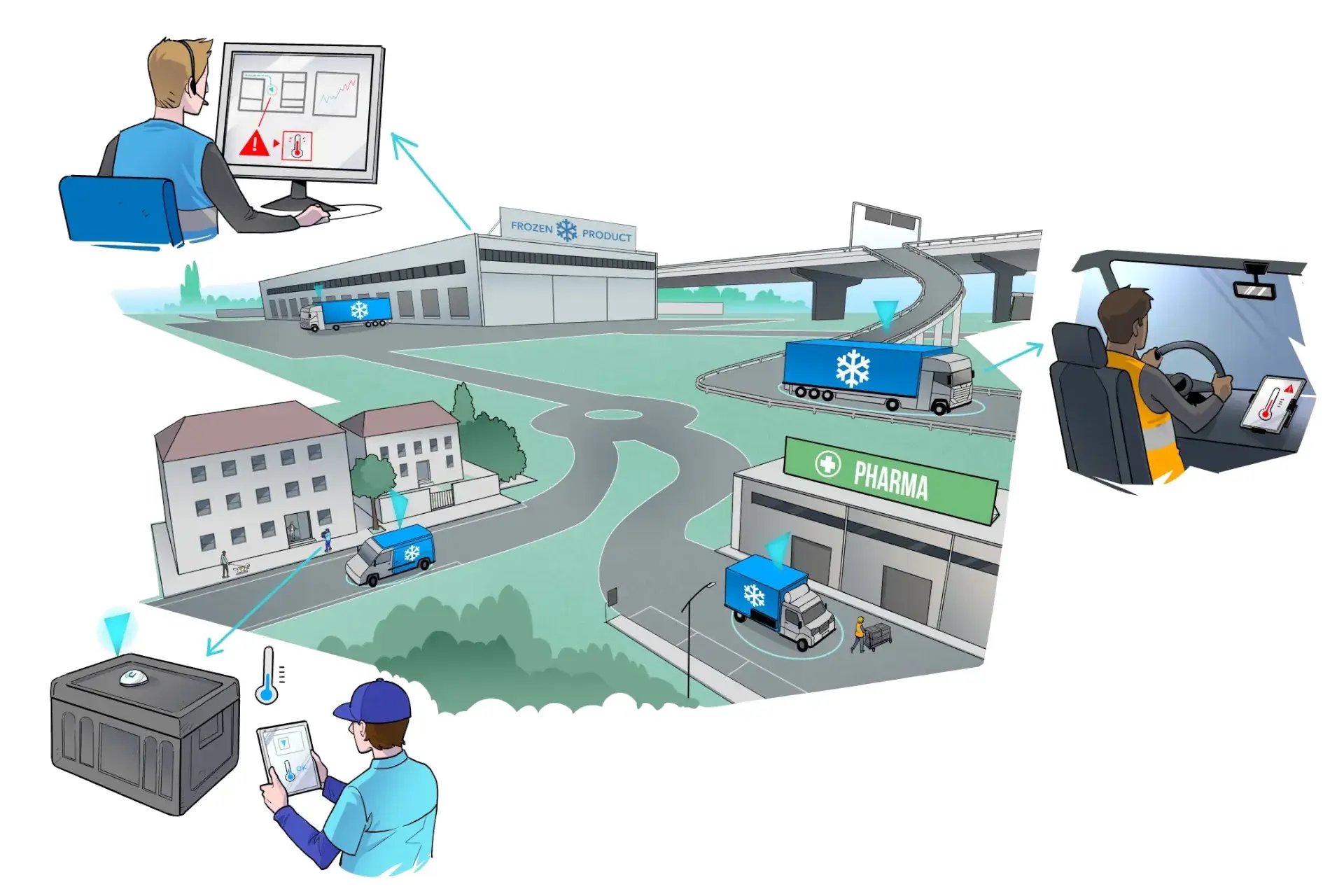
Geographic tracking and temperature control for each individual package
- The geographical tracking and temperature control of every single box of temperature-sensitive goods along their transport route
- Measuring each package's temperature to ensure compliance with the appropriate thermal profiles
- Guaranteeing compliance with established ties, with a visibility report on the thermal curve for each isothermal box as part of the transport certification
The RTLS solution for tracking and monitoring temperature-controlled packages
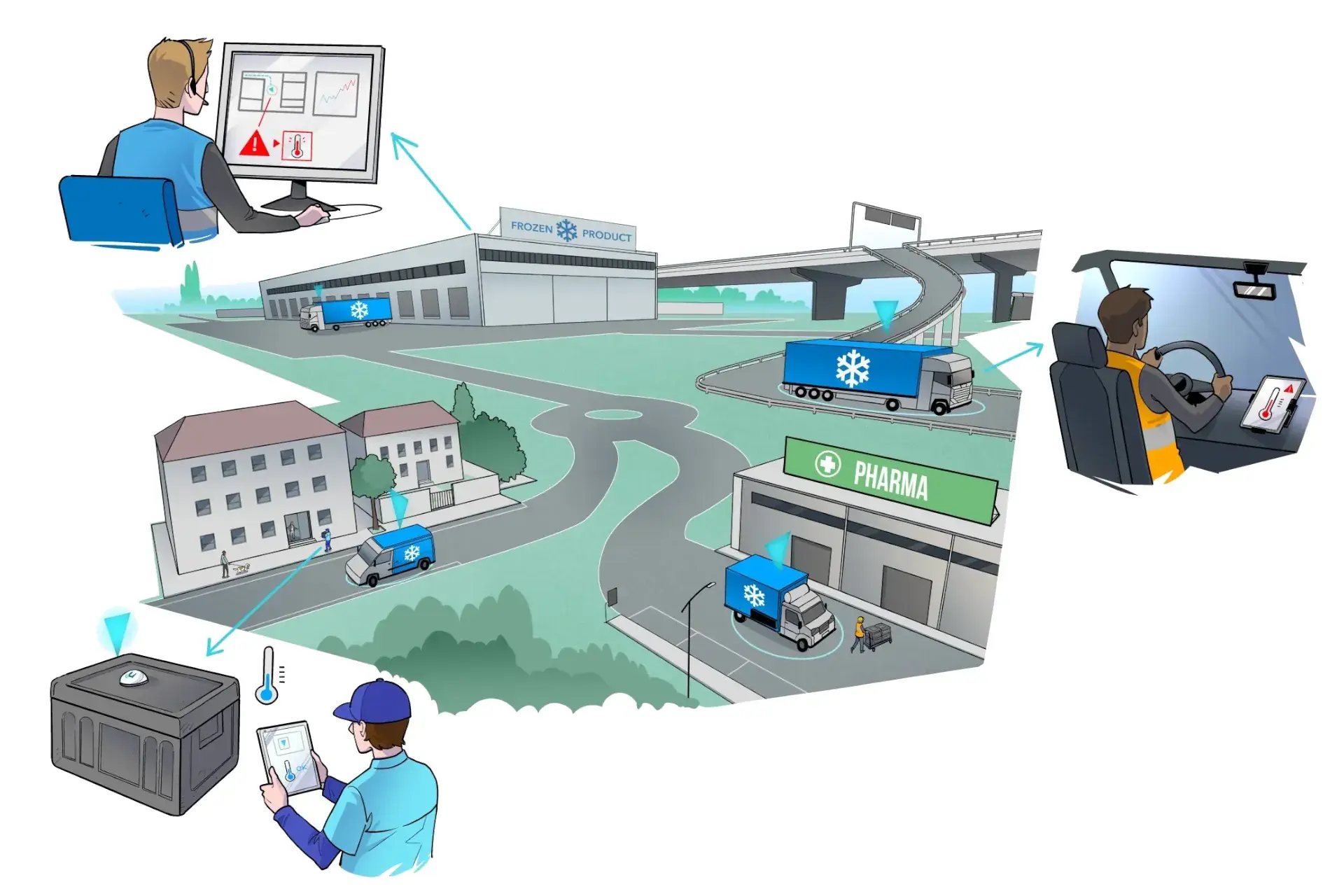
Benefits of applying temperature-controlled shipping solutions
 Data visibility is available in real time throughout the journey
 Transportation certification under EN 12830 and ISO 27001
 Push notification and real-time alarm when critical temperature thresholds are surpassed
 Every isothermal box's temperature and geographic location are tracked in real time
 The visibility of all temperature logs for each carried package
 Over-the-air management of devices and diagnostic data (battery status, faults, operating modes, etc.)
 Real-time data display and monitoring on a cloud-based platform
 Transportation operators and vehicles are correlated with location details and travel durations
Tracking and monitoring temperatures in the cold chain
Locating of loading units in the transport of temperature-sensitive goods with real-time value monitoring

Questions and insights
RTLS cold chain temperature monitoring is a solution that combines real-time location tracking with continuous environmental sensing to ensure that temperature-sensitive goods are maintained within required conditions throughout their storage and handling journey.
Ubiquicom's system attaches tags equipped with temperature sensors to pallets, containers, or individual shipments. These tags simultaneously report the current temperature reading and the precise location of the asset within the facility. If a shipment moves outside an approved cold zone or if temperature exceeds the permitted threshold, the system generates an immediate alert so corrective action can be taken before the goods are damaged or rendered non-compliant.
Temperature alone is not sufficient to manage cold chain compliance. Knowing that a shipment's temperature is within range without knowing its location means it is impossible to confirm that the goods are actually in an approved cold storage zone.
Conversely, knowing the location without monitoring temperature means there is no way to detect a refrigeration failure or an unauthorized handling event in a warm area.
By combining both data streams in a single system, Ubiquicom enables operators to confirm that the right product is in the right place at the right temperature at all times. This combined view is essential for meeting GDP (Good Distribution Practice), GMP (Good Manufacturing Practice), and FDA Food Safety Modernization Act compliance requirements.
Cold chain RTLS temperature monitoring is critical in several regulated industries.
-
Pharmaceutical and biopharmaceutical companies must maintain strict temperature windows for drugs, vaccines, and biologics from production through distribution.
-
Medical device manufacturers track components and finished devices that require controlled storage conditions.
-
Food and beverage processors and distributors must demonstrate that perishables remain within safe temperature ranges throughout the cold chain to comply with food safety regulations.
-
Chemical and specialty materials companies handle reagents and compounds that degrade outside specific temperature bands.
In all these sectors, regulators require documented evidence of continuous condition compliance, which RTLS with integrated sensors provides automatically.
Ubiquicom's cold chain monitoring platform uses configurable rules to trigger alerts when defined thresholds are crossed.
Temperature excursion alerts are generated when a sensor reading exceeds the upper or lower limit set for a specific product or zone. Location excursion alerts are triggered when a tagged shipment moves outside its designated cold storage area, for example when a pallet enters a staging area that lacks refrigeration. Both types of alerts can be delivered in real time via the platform dashboard, email notifications, or SMS messages to designated quality and logistics personnel. The alert includes the asset ID, its current location on the map, the current sensor reading, and the time the excursion began.
Ubiquicom's system automatically generates continuous, tamper-evident logs of temperature and location data for every tracked shipment. These records include timestamps, sensor readings at defined intervals, location history, and a complete record of any alerts and the response actions taken.
This documentation satisfies the audit trail requirements of GDP and GMP regulations for pharmaceutical distribution, HACCP requirements for food safety, and FDA 21 CFR Part 11 electronic records standards. Compliance reports can be exported per shipment, per storage zone, or per time period, significantly reducing the manual effort required to prepare for regulatory inspections and audits.
Cold chain failures cause substantial product losses in pharmaceutical and food industries.
RTLS temperature monitoring reduces waste in two ways. First, real-time alerts enable operators to respond to temperature excursions before damage becomes irreversible, recovering product that would otherwise be written off under a purely passive monitoring system. Second, the precise location data allows immediate identification of which specific pallets or units were affected by an excursion, rather than quarantining an entire batch. This targeted response minimizes the volume of product placed on hold for investigation.
Over time, the excursion data also reveals which zones, processes, or times of day carry the highest risk, enabling permanent improvements to cold chain procedures.
Ubiquicom's RTLS tags for cold chain applications can integrate a range of environmental sensors depending on the monitoring requirements.
Temperature sensors are the standard inclusion for cold chain applications, covering ranges from ultra-low freeze storage at minus 80 degrees Celsius up to ambient and high-temperature zones.
Humidity sensors can be added for products sensitive to moisture levels.
Some tag configurations also support door open/close detection for cold room or refrigerated container breach alerts.
Data from all sensors is transmitted alongside location data in real time, giving a complete environmental and positional picture for each asset through a single unified platform.