Skip to content
SYNCHRO

Processes optimization with Artificial Intelligence in intensive logistics


High-precision location technologies combined with AI to maximize productivity, increase efficiency, and reduce costs.

The smart solution for high-volume logistics

SYNCHRO optimizes fleets and routes in real time, reduces empty runs, and enables a performance-based model that aligns technology with results

SYNCHRO is an ad hoc solution for the high-intensity logistics sector. It makes the decreasing of “forklift missions execution time” possible by generating average savings of up to 20% in terms of total handling time.

Specifically, SYNCHRO optimises the number of forklifts in use in logistics warehouses, decreases missions of unloaded forklifts and increases the number of missions to be handled at the same time with equal resources. Thanks to the savings generated by integrating SYNCHRO to the high-intensity logistics management, it is possible to achieve objectives of integrated logistics:

  • greater efficiency
  • reduced operating costs.

Integrated logistics has been made possible thanks to the company's overall digital transformation process. SYNCHRO is able to integrate with warehouse operations and existing information systems (WMS). Partnering with customers is reflected by success-based pricing and by sharing savings achieved based on modern logistics servitization approaches

Operational diagram for forklift mission optimization and WMS integration
SYNCHRO: Smart Intralogistics Orchestration

SYNCHRO analyzes, makes decisions, and optimizes material handling operations in real time by integrating with the WMS

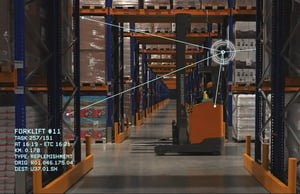
SYNCHRO is based on highly accurate location and tracking technologies combined with the clever use of artificial intelligence.

This ensures SYNCHRO matches the right tasks from the WMS (Warehouse Management System) to the right forklift truck dynamically and in real-time. Tasks are therefore adjusted constantly to maximise productivity, drive efficiency and reduce costs.

SYNCHRO integrates seamlessly with all modern WMS and WES – Warehouse Execution Systems – currently available.

The solution provides additional modules and components to further enhance productivity including:

  • real-time alerts for drivers
  • heatmap analysis to maximise planning of physical goods
  • performance dashboards for each forklift truck


Synchro: video trailer

Discover how to enhance real-time resource distribution and process management based on status and location.

Benefits of AI and RTLS applied to WMS

icon-box-connections
Assisted modeling
  • Warehouse assisted modelling
  • Estimated routes and travel times
icon-intelligence
Optimization with AI
  • Minimization of traffic, delays, and idle routes

icon-marker
Location in real-time
  • Knowledge of location of vehicles, operators and goods
  • Tasks status progress check
icon-chrono
Real-time management of context changes
  • Monitoring waves of tasks and resources status
  • Changing tasks priority dynamically
  • Misalignment management
icon-carrello-elevatore
Fleet optimization
  • Reduction in the number of forklift truck used

icon-settings-browser-2
High integration level
  • Compatibility and ability to integrate with almost all the WMS - Warehouse Management Systems and WES - Warehouse Execution Systems available on the market

icon-chart
Shorter missions
  • Reduction of storage and pick-up/deposit times

icon-economic-growth
Operational efficiency
  • Optimization of missions, resulting in reduced operating costs
Contact us

Ask our sales for information, demos and a quote

Get in touch with us, share your needs, context and project ideas, and get a quick consultation.
FAQ

Insights and FAQs on AI and RTLS


How can warehouse productivity be improved?

In particular, for large-scale, high-volume logistics operations, the warehouse is the heart of the business. Increasing its productivity is vital to boosting profitability while maintaining high quality and safety standards.

Complex logistics warehouses are generally managed by a Warehouse Management System (WMS), software designed to manage the operational cycle. With this software, companies can control all logistics processes, from receiving goods to shipping them out.

However, WMS has one limitation: it cannot manage events in real time. The list of tasks organized by the software does not account for changes in circumstances caused by other ongoing operations, delivery delays, machine breakdowns, or bottlenecks that slow down the handling of goods.

To increase productivity and warehouse profitability, a "booster" must be added to the WMS.